The audience eagerly awaits the moment when the musicians step onto the stage and the first chords ring out, setting the crowd in motion. In reality, a concert begins much earlier, when the equipment arrives and the crew starts setting everything up. Behind the scenes of a good band, there is no magic—only discipline and attention to detail. It is there, in the mysterious half-light backstage, that the fate of the performance is decided.
A Concert Begins Before the Stage
Before the musicians arrive at the venue, the organizer receives a technical rider. This is a document that explains what is needed for a proper performance:
- how many microphones will be used;
- where the instruments should be placed;
- what the lighting setup should be.
To the audience, these may seem like boring charts and specifications, but for the crew, they are a roadmap for survival. Even the slightest mismatch can turn a show into chaos. One musician cannot hear themselves through the monitors, another is standing too close to the horn section, or the vocal microphone is picking up unwanted noise. The more precise the rider, the more confidently the concert will run. A good band always tries to minimize risks in advance.
Load-In and Unloading: The Hardest Part of an Easy Evening
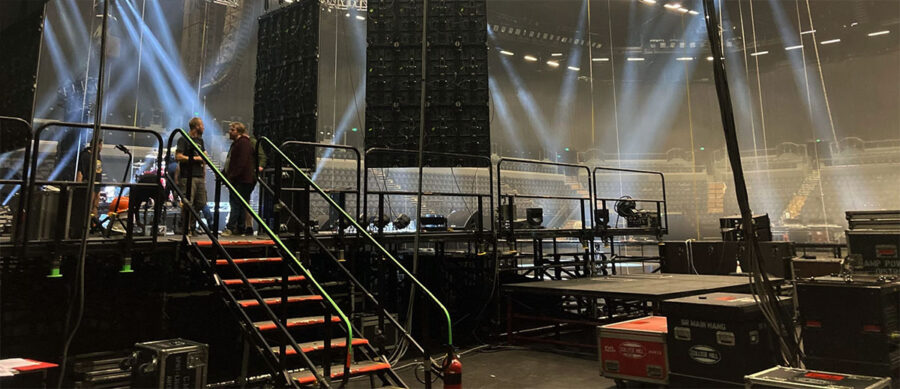
The first hours at the venue have very little to do with music. It is routine physical work. Cases are opened, stands are assembled, and bundles of cables stretch across the floor. At large festivals, everything is scheduled down to the minute. In clubs or at private events, the schedule may be more flexible, but deadlines exist everywhere.
Experienced teams operate with an almost everyday sense of order. Responsibilities are clearly assigned to each person. Vocalists are usually among the last to join the process, once the instrumental setup is complete.
What Happens on Stage While the Venue Is Empty
Before the audience arrives, the stage looks more like a worksite than a performance space. Indicators blink on the mixing console, the sound engineer speaks in short phrases, and musicians play fragments of parts. Nobody performs full songs for enjoyment. Everyone is checking specific things:
- whether the vocals can be heard through the monitors;
- whether the bass is producing any unwanted hum;
- whether the cymbals are ringing too sharply;
- whether the guitars are clashing with the horn section;
- whether there is enough room to move around.
This is the time when a concert can still be saved before it begins. Once the audience is in the room, fixing mistakes becomes much more difficult.

Soundcheck: The Most Honest Test
What happens during a soundcheck looks nothing like a normal concert. The drummer hits each drum individually. The bassist repeats the same note over and over again. The vocalist tests the microphone. From the outside, it may sound strange, but this is exactly how the overall sound is built. The goal of a soundcheck is to create the perfect balance. If a band has two vocalists, they need to be mixed so that one voice complements rather than interferes with the other.
At professional venues, a soundcheck can take several hours. Some bands even specify a minimum amount of time for setup and sound testing in their riders. This should not be viewed as a whim. If a musician cannot hear themselves properly, they will either play louder or more cautiously. In both cases, the audience hears a lower-quality sound.
An empty room sounds different from a venue filled with people. Audience members absorb some of the high frequencies, and the perception of volume changes. An experienced sound engineer leaves room for adjustments during the opening moments of the performance.
Backstage: Silence Before the Noise
Behind the stage, musicians can behave in very different ways. Many performers need concentration before a show begins. Some try to ease the tension with well-timed jokes. Backstage clearly reveals the difference between amateurs and professionals. Amateurs often waste energy before going on stage by arguing, worrying, and constantly rushing around. Professionals conserve their energy because they know when it will truly be needed. Before stepping on stage, they usually check several things:
- the order of the songs;
- instrument tuning;
- spare cables, picks, and drumsticks;
- communication with the sound engineer.
When something breaks
During a live performance, a microphone can fail, a string can snap, or software can malfunction. Professionalism becomes most visible in critical situations.
A good musician does not panic. The guitarist grabs a backup instrument. The vocalist fills the pause by interacting with the audience. The drummer keeps the tempo steady while a technician replaces a cable.
Sometimes the audience is left with the impression that everything happened exactly as planned. That is the best possible outcome. What makes a live concert different from a recording is that it carries an element of risk—but that risk should never turn into disorder. That is why backup solutions are always ready behind the scenes.
After the Final Chord
The last song ends, the audience applauds, and the musicians take their bow. For the crowd, the evening is almost over. For the band, the reverse process begins. The instruments need to be packed away, the cables rolled up, the stands dismantled, and the dressing room checked to make sure nothing has been left behind. After a great concert, this part can feel slightly strange. Just ten minutes earlier there was noise, light, and movement. Now the stage is filled with the clicks of latches and the brief conversations of technicians.It is often in this moment that tired musicians realize just how successful the evening was.
The success of a live performance depends on talent, but behind that talent are technical documentation, rehearsals, logistics, soundchecks, and a team ready to solve problems quickly. There is no glamour behind the scenes—only hard work. The better that work is done, the brighter the show will be.